- D23 Shutter
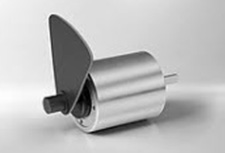
D23 Shutter
Call for Price
Price Summary
- $1,511.68
- $1,511.68
- $1,511.68
Based on our rotary solenoids D2, Kendrion offers a wide range of highly reliable optical shutters that are designed to block light and laser beams for safety purpose.
| Weight | 0.25 lbs |
|---|
Be the first to review “D23 Shutter” Cancel reply
You must be logged in to post a review.
Related Products
CDR030 Shutter
Based on the bistable rotary solenoid CDR030, Kendrion offers a bistable shutter in the field of optical safety technology that enables currentless holding in both end positions. The built-in permanent magnets hold the end
positions. This makes the magnet design very energysaving.
D1 Shutter
In the field of optical safety technology, Kendrion offers a compact miniature shutter based on our smallest rotary solenoid D1. This shutter is characterized by its high reliability and long lifetime of 10 million switching cycles. In addition, this shutter has a fast closing time from under 20 ms.
Recently Viewed
D23 Shutter
Based on our rotary solenoids D2, Kendrion offers a wide range of highly reliable optical shutters that are designed to block light and laser beams for safety purpose.
Item # 50150
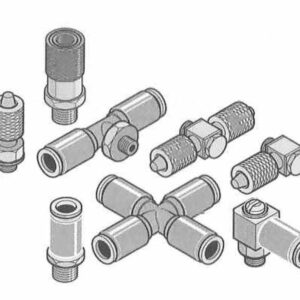
Brass metric sized fittings provide a full family of connectors for most applications in miniature pneumatics. Machined from solid brass stock, fittings are dependable, easy to install and reduce space requirements.
Series 50 fittings also include quick connect couplings and brass manifolds.
Item # 51018-00US
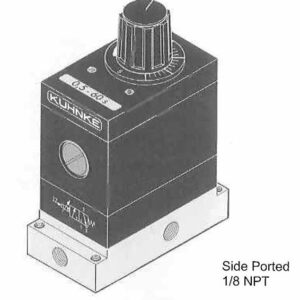
The Series 51 timer is an adjustable precise time delay control device. The timer is available with either an on delay- (NC) or off delay- (NO) 3 way built-in valve. It is designed for mounting along with valves or other logic devices and is available with 10-32 (M5) bottom ports, or 1/8″ NPT side ports. Bottom ported timers can also be panel mounted using (2) threaded M3 inserts on the top cover.
Timing operation can be set up in 2 ways; either via direct connection of the pressure line to be timed (1/8″ NPT ported only) or via a separate pilot signal. When pressure is applied to the input (or pilot port) the timing sequence begins by setting a vacuum within the timer. Using atmospheric pressure (independent of line pressure), the timer begins the preset timing cycle. At the end of the cycle an internal 3 way valve is switched providing an output. The timer resets automatically after removal of the control signal.


There are no reviews yet.